

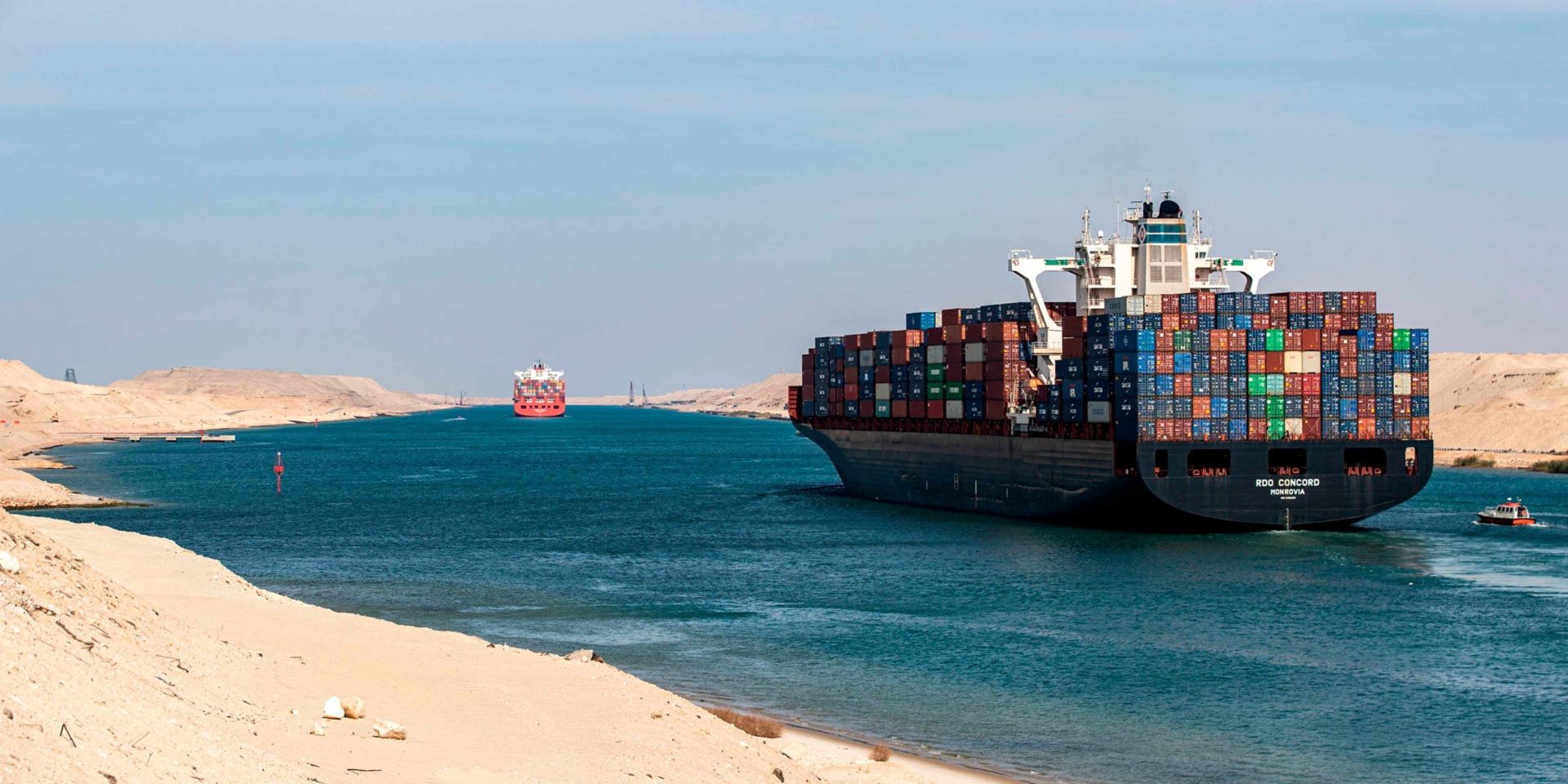
In recent months, the Red Sea and the Suez Canal have returned to the center of global logistics conversations. Not due to a single event, but because the decisions being made around this corridor reflect a deeper shift: normalcy is no longer a shared concept.
Suez remains one of the most critical maritime corridors for global trade, especially for container traffic connecting Asia, the Middle East, and Europe. However, its operation no
longer follows a uniform logic. While some carriers have begun to resume select services through the canal, others continue to reroute via the Cape of Good Hope, prioritizing predictability over risks that are still not fully resolved.
The data reflects this fragmentation. In the early weeks of the year, Suez traffic showed partial recovery but remained far from pre-crisis levels. At the same time, a significant portion of the global fleet continues to operate alternative routes, accepting longer transit times and higher costs in exchange for operational stability. There has been no coordinated sector-wide decision, but rather adjustments made by carrier, service, and cargo type.
For exporters and importers, this duality translates into a more complex planning scenario. Uncertainty now lies not just in how many days a shipment takes but in how reliable the chosen route is. Two shipments with similar destinations may face different itineraries, surcharges, and arrival windows, even if they depart at similar times. That variability reduces the ability to anticipate and forces greater caution in commercial commitments.
Markets such as Ecuador magnify this effect. Distance makes any rerouting a critical factor for costs, inventory management, and on-time delivery. When the global system operates without synchronization, margins for maneuver shrink, especially for time-sensitive or seasonally dependent cargo.
Capacity management remains a key factor. Continued selective sailing cancellations and active fleet management allow carriers to absorb volatility but also introduce more complexity for those who rely on regular services. Securing space is no longer enough, nor is choosing the lowest rate; what matters now is which service is used, under what conditions, and with what level of reliability.
Rather than asking whether Suez has “returned,” the real question is how to operate when a key corridor functions under changing rules. Stability, once defined as system-wide uniformity, is no longer the reference point.
In 2026, the Red Sea and Suez Canal remain vital routes, but they no longer offer a shared logic. Every logistics decision—which route to take, with which carrier, under what conditions—requires tactical judgment, not just operational execution. For companies exporting from small, distant economies like Ecuador, the risk lies not just in moving slowly but in moving without context.
At Grupo Transoceánica, we embrace that role: being the partner that helps read the system, anticipate scenarios, and make informed decisions. Because today, understanding the route is just as important as traveling it.